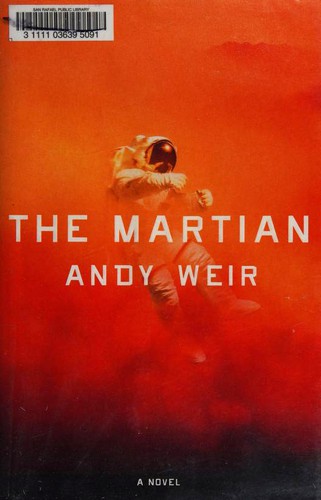
The Martian
Stranded astronaut Mark Watney uses engineering and botany to survive alone on Mars until rescue.
Knowledge
Courses, hands-on projects, technical topics, and reading — what I'm learning and where it comes from. Click a card for details and resources. Updated 2026-10-14.
Georgia Tech OMSCS coursework.
Introduction to information security: threats, defenses, and hands-on attack/defense projects.
Graduate algorithm design and analysis with an emphasis on proofs.
Survey of supervised, unsupervised, and reinforcement learning with analysis-heavy reports.
Probabilistic AI techniques for robots: localization, tracking, planning, and control.
Foundations of computer vision: image formation, features, geometry, and recognition.
Theory and practice of reinforcement learning, with paper-replication projects.
Deep neural networks from first principles to modern architectures.
Systems and algorithms for large-scale data processing and analytics.
Modeling, design, and verification of cyber-physical and embedded systems.
Free elective slot; systems/embedded options (e.g. CS 6200 Intro to Operating Systems) also considered.
Build-it-to-learn-it hardware and software projects.
Detect vibration anomalies on a motor/fan using an ESP32 and MPU6050 IMU with statistical thresholds.
Stream MPU6050 data as CCSDS Space Packets and decode/graph them in OpenC3 COSMOS.
Build an F Prime deployment with a custom IMU component and command sequences.
One test suite runs against a Python simulator (SIL) and real hardware (HIL).
Time-series telemetry archive with dashboards, alerts, and detector comparison.
Two ESP32 CAN nodes exchange commands/telemetry while running a PID speed loop.
Areas of focused self-study.
CCSDS packet and frame standards used for spacecraft telemetry.
How commands are built, sequenced, accepted, and verified on spacecraft.
Flight software frameworks (F Prime, cFS) and their interface conventions.
Debugging where hardware and software meet: buses, drivers, and timing.
Ground systems and test benches, from simulation to hardware-in-the-loop.
Feedback control theory and practical PID tuning.
Turning sensor data into state estimates and scene understanding.
Bringing subsystems together against interface requirements.
Repeatable test procedures and verification for hardware in production.
Verifying and validating systems against requirements with bidirectional traceability.
Inductive and deductive failure analysis and structured anomaly root-cause methods.
Using bench instruments to debug signals and serial buses.
Automated hardware/software tests with pytest in CI, using AI assistants to draft and review tests.
Statistical and ML methods for detecting anomalies in spacecraft telemetry time series.
Software engineering and assurance standards for airborne and NASA flight/ground software.
Industry certifications and exams worth preparing for.
Entry-level NI LabVIEW certification: 1-hour multiple-choice exam on LabVIEW fundamentals and reading code.
4-hour practical NI exam: build a documented LabVIEW application from a spec, graded on style, functionality and documentation.
IPC requirements for soldered electrical/electronic assemblies; written plus hands-on workmanship exams.
IPC acceptability criteria for electronic assemblies, used for inspection across Class 1/2/3.
Requirements and acceptance for cable and wire harness assemblies, with a Space endorsement; related NASA workmanship standards.
Electrostatic discharge control basics for handling flight and test hardware.
Fundamentals of Engineering exam: 110-question computer-based exam, first step toward PE licensure.
Baseline security certification recognized under DoD 8140 for cyber workforce roles.
Linux administration and command-line skills used by test automation and ground systems.
Cloud fundamentals and architecture for CI/CD and data pipelines.
Novels that fuel the curiosity.
Stranded astronaut Mark Watney uses engineering and botany to survive alone on Mars until rescue.
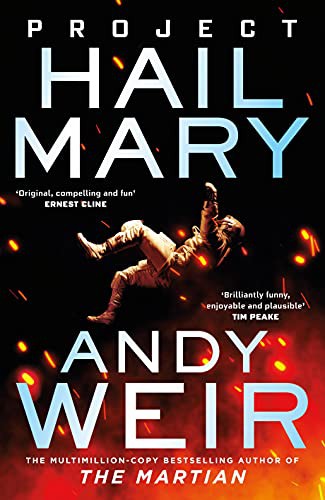
An amnesiac science teacher wakes alone on a starship and must solve the mystery of a star-dimming microbe to save Earth.
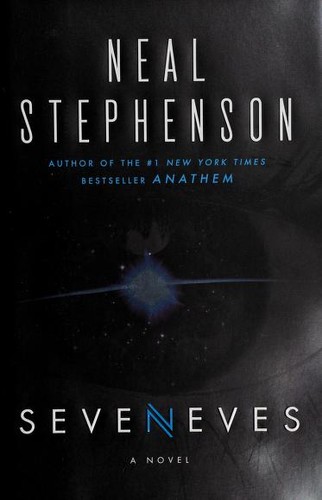
When the Moon shatters, humanity races to build an orbital ark before a centuries-long bombardment sterilizes Earth.
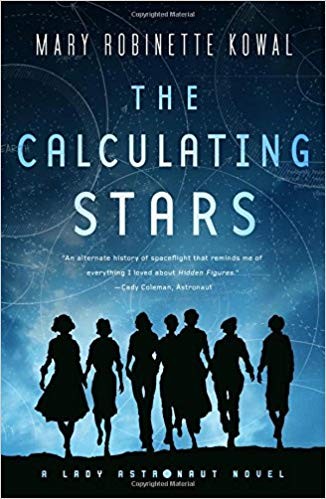
After a 1952 meteorite strike, mathematician Elma York fights to join an accelerated space program as an astronaut.
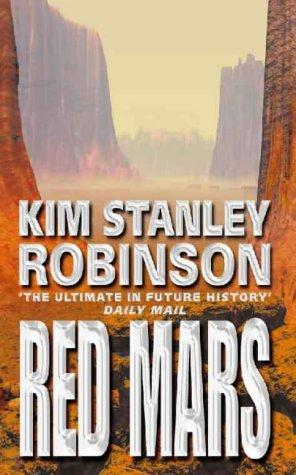
The first hundred colonists settle Mars, clashing over terraforming, politics, and the planet's future.
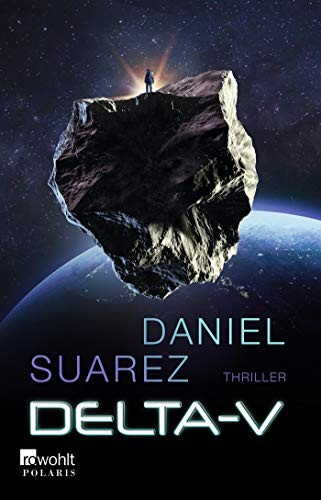
A cave diver is recruited for a privately funded mission to mine a near-Earth asteroid.
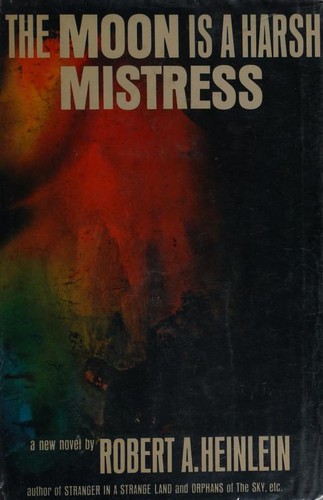
A computer technician, a self-aware computer, and lunar colonists revolt against Earth's rule.